





Charles Sturt University

Digital magazine

Research
Showcase

From regional Australia
to the world.

Aerial view of parallel crop rows, a track and trees
Cover photography Bernd Dittrich / Unsplash

Contents

In this issue

Three stories about how people, partnerships and research are shaping the future of farming.

Partnerships

Climate-smart farming across borders

Read story

Food systems

From paddock to pint

Read story

Crop protection

A vision for agricultural RNA innovation

Read story

Research priorities

Research that counts

Charles Sturt works with communities, industry, government and First Nations partners to turn research into practical outcomes.

Food security

Sustainable agriculture and strong biosecurity help strengthen food systems and support productive, resilient agriculture.

Water and ecosystems

Research supports water security, ecosystem recovery and biodiversity.

Regional health

Research helps improve health and wellbeing and strengthens regional health systems.

Education and inclusion

Research expands opportunity and helps communities participate and thrive.

Digital technology, artificial intelligence and cyber, engineering, business and economics, and cultural, ethical and community knowledge help connect these priorities to real-world applications.

Partnerships

Climate-smart farming
across borders

An India–Australia partnership is connecting Charles Sturt’s research farms with India’s agricultural technology network.
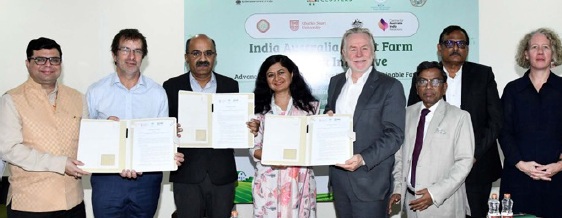
Delegates gather and hold signed documents at an Indo–Australian Global Digital Farm event
India–Australia agricultural technology collaboration. Photo supplied.

Charles Sturt University is connecting its agricultural research and demonstration capabilities with India’s agricultural technology sector to advance climate-smart farming, digital agriculture and sustainable food systems.

The partnership brings together Charles Sturt’s Global Digital Farm and AgriPark with Indian research, industry and farmer networks. Workshops in Bengaluru and Hyderabad brought together government representatives, researchers, industry, start-ups and farmers to identify shared priorities for agriculture and horticulture.

The collaboration will support applied research and technology demonstrations to help farms adapt to climate pressures, make better decisions and maintain sustainable production. It also creates opportunities for students to study or work across both countries, for start-ups to get involved and for partners to invest together.

Explore the partnership at Charles Sturt

Food systems

From paddock
to pint

In Victoria’s Wimmera, barley growers and researchers are measuring what happens in the paddock to better understand emissions across the beer supply chain.

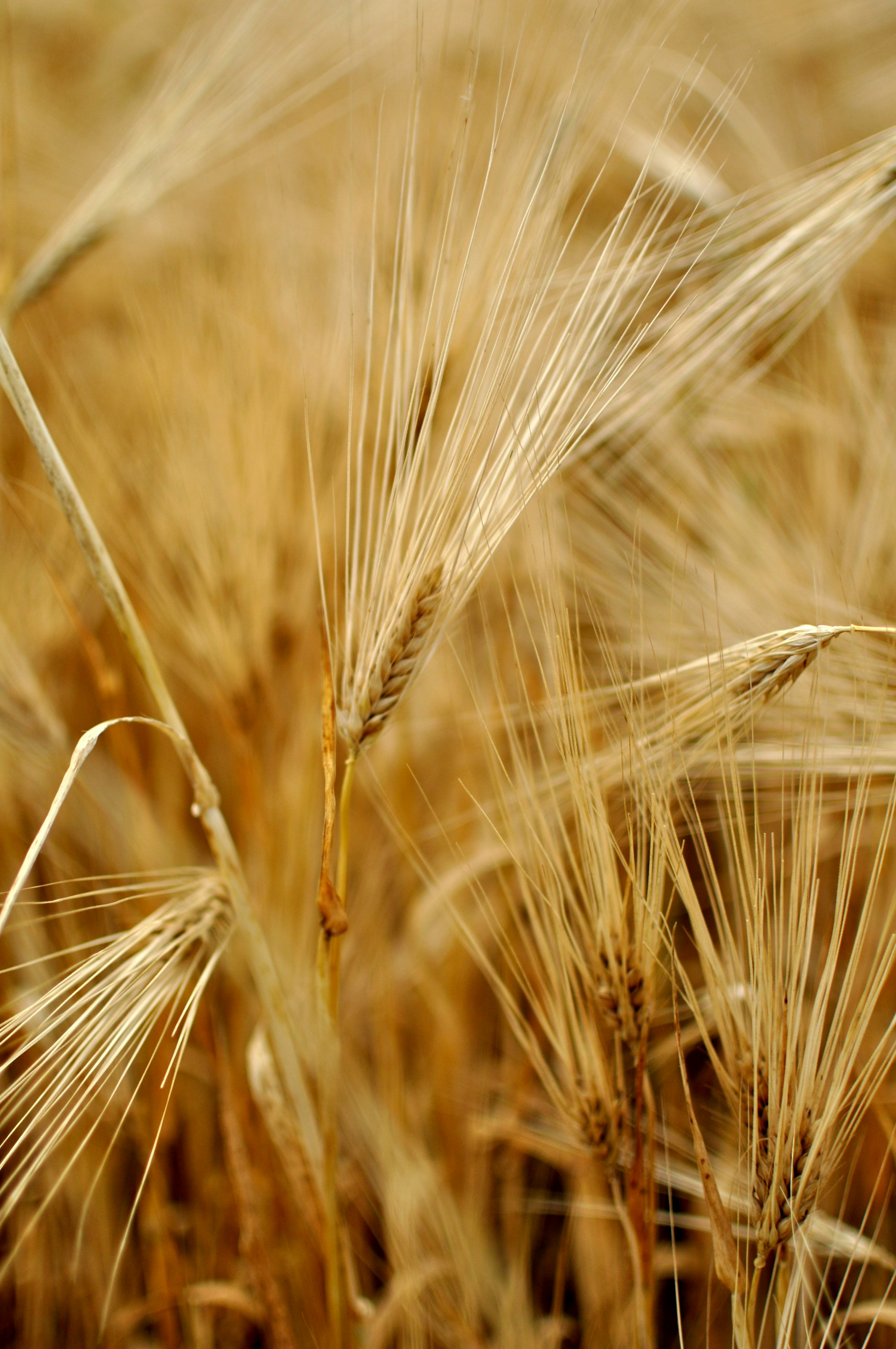
Golden barley heads in warm afternoon light
Illustrative photograph. Jelena Senicic / Unsplash

Through Charles Sturt’s Cool Soil Initiative, researchers are working with Asahi Beverages and nine Wimmera barley growers to measure emissions associated with barley production.

Researchers combine soil and farm-management data, including fertiliser use, herbicide application and field operations, to produce emissions reports for individual paddocks. Growers can use the reports to benchmark their performance and identify ways to improve nutrient-use efficiency, soil health and productivity.

The work builds on the Victorian Barley Program by adding emissions measurement and benchmarking. For Asahi, it provides a clearer picture of emissions associated with the barley it sources nationally.

Read the Charles Sturt case study
9Wimmera barley growers participating
75,000tonnes of barley Asahi sources nationally each year
≈300 millionlitres of beer produced annually at Abbotsford using barley from the program

Crop protection

A vision for agricultural
RNA innovation

An international conversation on crop protection points to a proposed research and manufacturing hub in Wagga Wagga.

Translucent leaf veins backlit by sunlight
Illustrative photograph. CHUTTERSNAP / Unsplash
500+symposium registrations
54countries represented

Charles Sturt’s international symposium on RNA interference (RNAi) in crop protection brought researchers, regulators, policymakers and industry together to discuss the science, regulation and practical adoption of emerging crop-protection approaches.

Charles Sturt hosted the OECD-sponsored virtual symposium with CSIRO and The University of Queensland. The event also placed a broader ambition in context: the proposed Agricultural RNA Innovation and Manufacturing Hub in Wagga Wagga, championed by Professor Neena Mitter, Deputy Vice-Chancellor (Research).